

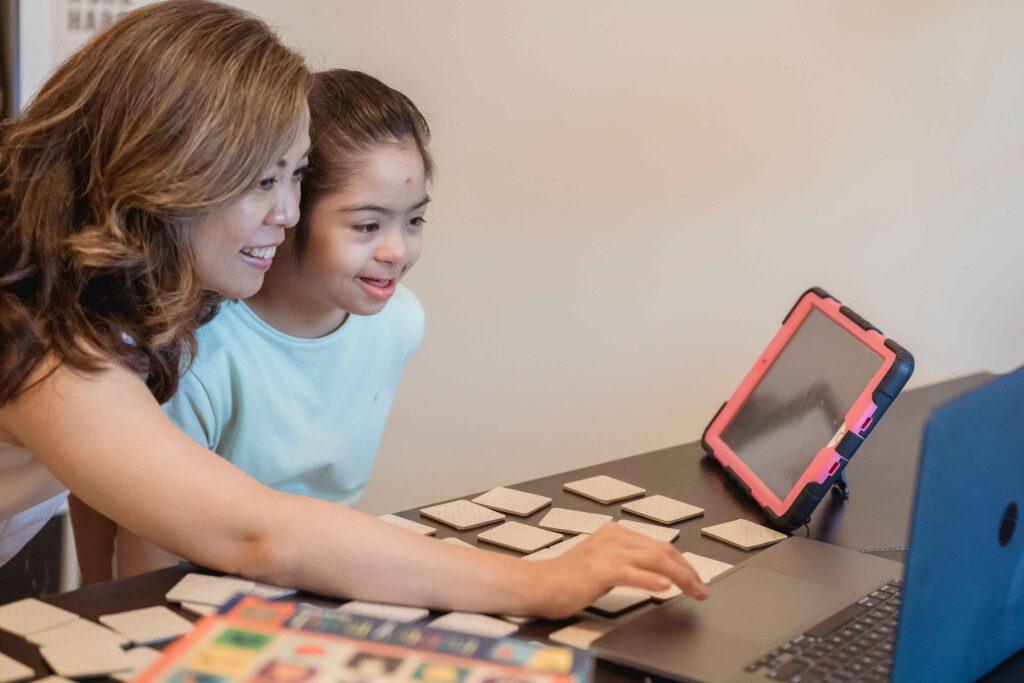
Talking looks completely different from kid to kid. You’ll see children who can speak fluently struggle to express basic needs, while others rely almost entirely on body language, vocalizations, or behaviors to communicate.
Thank you for reading this post, don’t forget to subscribe!
That’s where AAC devices step in.
Augmentative and alternative communication gives kids dependable tools when spoken words aren’t enough. With the right setup, it takes the guesswork out of making choices, sharing thoughts, and jumping into daily routines.
What Is an AAC Device?
AAC stands for augmentative and alternative communication. Basically, it is any tool or system that backs up communication when spoken words fall short.
Setups can be super simple or run on high-tech. You’ll see things like:
- Picture cards
- Visual schedules
- Sign language
- Symbol books
- Speech-generating apps on iPads
These tools let a child tap an icon that speaks out loud, or simply give them a clear visual way to point and show what they mean.
No single system works for every kid. Fine motor skills, current speech levels, personal preferences, and daily routines all dictate which tool actually makes sense.
How AAC Helps Autistic Children Communicate
The primary goal of AAC is providing a reliable voice. For some kids, it supports developing speech. For others, it serves as their primary way to connect.
Expressing Basic Needs
Parents usually notice the quick relief when basic requests get easier. Kids use AAC to ask for snacks, drinks, toys, breaks, going outside, or a specific person. Caregivers no longer have to guess what’s wrong.
Making Real Choices
Choosing what you want gives kids actual control. With AAC, picking out an outfit, a toy, or a snack is simple. Hold up two options, let them hit the matching button, and suddenly they’re actively running their own routines.
Sharing Feelings and Ideas
AAC goes way past basic requests. Depending on their setup, kids can express when they feel happy, tired, scared, or excited. They can answer questions, comment on what they see, or share a fun experience with you.
Participating in Daily Life
Kids need to talk all day long, not just in therapy. Keeping their device on hand at home, school, or the playground gives them continuous practice in real-life situations.
Does AAC Prevent Speech Development?
This concern pops up constantly for parents.
Using AAC will not stop a child from learning to talk. It works right alongside speech therapy. For kids actively building spoken words, AAC takes off the extreme pressure to speak perfectly, providing a dependable backup while speech develops naturally.
The end goal is functional communication, whether that happens through spoken words, a screen, or a mix of both.
Choosing the Right AAC Device
There is no magic, universal device. A system that works wonders for one child might totally flop for another.
Professionals weigh several factors when matching a device:
- Current speech, fine motor skills, and vision
- How well the child understands pictures versus written words
- Main places where communication breaks down
- How easily parents and teachers can manage the system on the go
If a device is too clunky to carry around, it won’t be there when your child actually needs to speak.
Helping a Child Learn to Use AAC
Handing over a device is just step one. Kids need constant, low-pressure opportunities to figure out how it works.
- Model it yourself. Use the device while talking to them. Press “more” on the screen while saying out loud, “Do you want more?”
- Keep it within reach. A device hidden in a backpack helps nobody. Keep it accessible everywhere.
- Start with high-motivation words. Focus first on things your child loves like “bubbles,” “swing,” or “snack.”
- Give them time to process. Don’t rush in with constant prompts. Pause and let them find their words.
- Practice across the day. Use the device during meals, errands, and playtime so they see its real value.
How ABA Therapy Supports AAC Use
ABA therapy incorporates AAC into real-world communication goals. Therapists work on requesting, making choices, and social interactions during everyday play rather than boring drills. Parents also learn how to support AAC use seamlessly during home routines.
Consistency across therapists, teachers, and parents gives children the highest chance of success.
Conclusion
The right AAC tool gives your child a voice, making daily routines smoother and far less frustrating.
At Gradual Behavioral Health, our ABA therapy targets practical communication while equipping parents with real, everyday guidance.
Book a consultation with our team today to get started on a personalized care plan for your family.
Frequently Asked Question
Is AAC only for nonspeaking children?
No. It supports nonspeaking kids as well as children who talk but need extra help during stressful or overwhelming moments.
At what age can a child start AAC?
There is no minimum age requirement. It depends entirely on when a child needs help getting their ideas across.
Can AAC be combined with speech therapy?
Yes. AAC and speech therapy complement each other, building overall communication from multiple angles.