

Autism makes ordinary sensory input unpredictable. A sudden noise or clothing tag can feel agonizing for one child, while another seeks out deep pressure and movement just to ground themselves. Sensory tools give them a safe outlet to hit that reset button.
Thank you for reading this post, don’t forget to subscribe!
Finding what works is pure trial and error. What chills out one kid might totally agitate another. The trick is simply tracking what your child gravitates toward on their own.
How Sensory Toys Support Self-Regulation
Handing a child a sensory tool gives them a bit of control over an overload or meltdown. Squeezing, fidgeting, or watching slow motion gives their body targeted feedback to help them settle or concentrate.
They aren’t silver bullets, though. The wrong input can amp a child up instead of relaxing them. The point isn’t forcing a popular toy into their hands, but noticing what actually works for their body.
10 Calming Sensory Toys for Autism
1. Fidget Toys
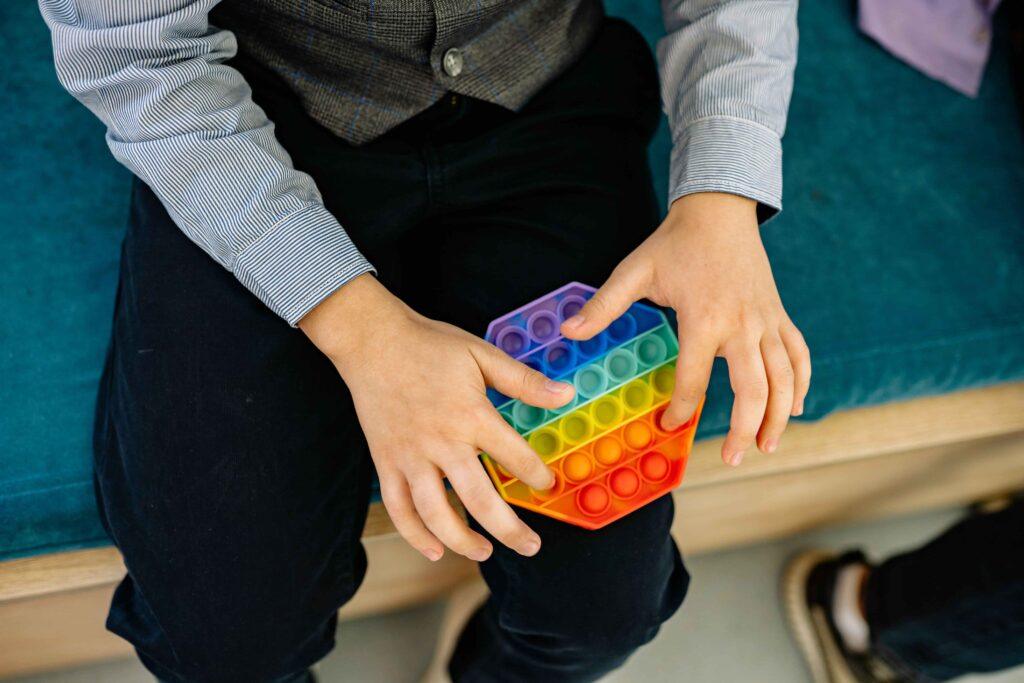
Fidget cubes, poppers, and spinners give restless hands an easy outlet. They’re lifesavers during boring waiting rooms, long drives, or endless sitting at school. You’ll probably need to test out a few different textures before landing on one your child actually sticks with.
2. Stress Balls and Squeeze Toys
Squeezing against physical resistance gives kids a quick way to dump built-up tension. You can find them in every shape, size, and squish factor. A squishy gel ball might work for one child, while another needs rock-hard foam that actually makes their hand muscles work.
3. Sensory Putty or Therapy Dough
Stretching, pinching, and rolling putty gives kids deep muscle resistance while building fine motor control. Just make sure to skip sticky doughs if your child hates messy or tacky sensations on their palms.
4. Weighted Stuffed Animals
Placing a weighted plush on a child’s lap provides grounding, deep pressure input that feels like a firm hug. They work wonders during quiet reading time or bedtime routines. Always follow age safety guidelines for weighted gear.
5. Textured Sensory Balls
Bumpy, spiky, or ridged balls combine tactile touch with physical movement. They let active kids stay on the move (e.g. rolling, bouncing, or tossing), while getting strong tactile feedback through their hands or feet.
6. Liquid Motion Toys
Visual sensory seekers love watching colorful oil and bubbles slowly drift inside sealed liquid timers. It offers a predictable, hypnotic focus point during quiet breaks or right after a stressful transition.
7. Sensory Brushes
Firm, sweeping strokes across the arms or back offer deep tactile input. However, brushing routines shouldn’t be guessed at. Work with an Occupational Therapist first to make sure this specific input fits your child’s nervous system.
8. Chewable Sensory Toys
Silicone chew necklaces and oral tubes give kids a safe outlet when they instinctively chew on shirt collars, pencil erasers, or fingers. Look for durable, non-toxic materials built for their specific chewing intensity.
9. Noise-Reducing Ear Defenders
Overwhelming auditory environments like crowded supermarkets or loud school cafeterias get much easier with ear defenders. They muffle intense background chaos without totally shutting out safe, ambient sounds.
10. Sensory Swings
Swinging delivers deep sensory input that helps reset a child’s internal system. Pod swings take it a step further by giving them a cozy, enclosed cave to escape to when the rest of the home gets too loud.
How to Choose the Right Sensory Toy for Your Child
You don’t need to clear out a toy store to figure this out. Just observe your child’s daily habits:
- See if your kid instinctively seeks out heavy muscle work, noise, or oral input.
- Pair quiet fidgets with classrooms and larger sensory gear with the playroom.
- If a toy makes your child visibly agitated, drop it immediately.
- Always check for tear points, small parts, and age appropriateness first.
- Roll out new items gradually so you can pinpoint what helps.
A kid’s sensory cravings flip fast when exhausted. Make sure to adapt to where they are at the moment.
When to Seek Professional Support for Your Child
Sensory issues quickly spill into everything else. If sensory distress is constantly hijacking sleep, schoolwork, or family outings, calling in expert help makes a huge difference.
An Occupational Therapist (OT) can assess your child’s exact sensory profile. Atlanta ABA therapists can also step in to help your family manage sensory triggers and reduce daily meltdowns.
Supporting Your Family’s Sensory Journey
The best sensory tool isn’t whatever expensive gadget is trending online. It’s just the simple item your child safely reaches for when the world gets too loud.
Gradual Behavioral Health, an ABA therapy in Georgia, creates practical strategies that fit into your actual daily routine. If you’re looking for personalized support, get in touch with our team today to see how we can support your family.
Frequently Asked Questions
Are sensory toys good for kids with autism?
Yeah, assuming you pick things your child actually likes using. They give kids a safe, controllable way to manage all the sensory noise around them.
What is the best sensory toy for calming down?
There’s no universal winner here. One child might need deep pressure from a weighted plush to reset, while another needs a chew pendant or a liquid motion timer to settle.
Can a sensory toy stop a meltdown?
They work great for catching overload early, but once a full-blown meltdown hits, a toy rarely turns it off mid-stream. They’re prevention tools, not emergency switches.
How do I figure out which toy my child actually needs?
Just watch their natural habits at home. If they’re always jumping off couches, start with movement tools. If they’re gnawing on their sleeve, try silicone chew fidgets.