

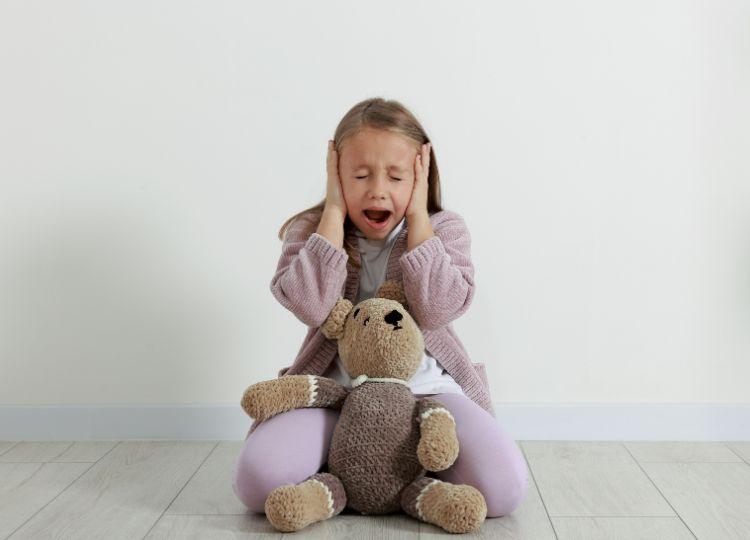
A child covering ears when the vacuum kicks on. A screaming blowout in the middle of a crowded store. A complete, silent shutdown at a noisy family party.
Thank you for reading this post, don’t forget to subscribe!
Moments like that leave most parents asking the same thing: “Is overstimulation a sign of autism?”
The short answer? It can be. Many autistic kids process noise, light, textures, and smells with intense physical distress.
But sensory overload on its own isn’t proof of autism. Kids get overwhelmed for plenty of other reasons, too.
What Is Overstimulation?
Overstimulation happens when a room throws more data at the brain than it can handle. Trying to filter all that input causes the entire system to stall out.
When overload sets in, you’ll usually see physical signs:
- Hands over ears or eyes squeezed shut
- Immediate stress over loud or unexpected sounds
- Running toward doorways or trying to hide
- Crying, yelling, or physical restlessness
- Shutting down and going non-verbal
- Trouble following simple instructions
- Taking a long time to settle back down
Every child’s profile is different. A noisy room might trigger one kid, while a scratchy collar sets off another. Overstimulation isn’t exclusively an autism trait, either. It’s very common in kids with ADHD, anxiety, or general sensory sensitivities.
Is Overstimulation a Sign of Autism?
Sensory issues are linked to autism, but overstimulation alone isn’t a definitive sign.
Every child’s nervous system handles input differently:
- Hypersensitive kids feel the world at full volume – a basic appliance sound can cause actual panic.
- Some kids barely register sensory data, meaning they completely miss danger or social cues around them.
- Others actively hunt for sensory input by spinning in circles, leaping off couch arms, or touching every wall in sight.
These differences trigger overload fast. Autism involves way more than just sensory sensitivity. Signs of autism also center around social communication patterns and repetitive behaviors.
Focusing on how your child develops overall matters way more than isolating one single meltdown.
What Does Sensory Overload Look Like in a Child?
Kids don’t all react to overload the same way.
Some cry, yell, cover their ears, bolt, or pace. Others react silently by turning off, pulling back, and ignoring everything in the room.
You might notice a pattern where your child:
- Panics in noisy, crowded spaces
- Refuses specific foods, textures, loud appliances, or stiff clothes
- Freak out under harsh overhead lights
- Checks out during high-input group activities
- Need hours of quiet alone time after a busy outing
- Get irritable or anxious as a room gets louder
- Rock, pace, or use repetitive movements to soothe themselves
What Other Signs of Autism Should Parents Look For?
If sensory sensitivity brought you here, look at social communication next. How does your kid connect with others?
Autism usually involves distinct social patterns alongside repetitive behaviors:
- Trouble with two-way conversation or sharing moments
- Unconventional eye contact and body language
- Hesitation to play or interact with kids their age
- Repeating specific actions, words, or phrases over and over
- Needing strict daily structure to feel grounded
- Total meltdowns over small, unexpected changes
A child doesn’t need to check every single box on this list to have autism. Conversely, displaying one or two of these behaviors doesn’t automatically mean they are on the spectrum either. That’s precisely why a comprehensive developmental evaluation looks at the child as a whole.
How Can Parents Help When a Child Is Overstimulated?
When your child hits a wall, your main job is simple: help them feel safe so their nervous system can reset.
Lower the sensory input immediately. Step into a quiet hallway, walk outside, dim the lights, or give them physical space away from the crowd.
Start tracking their triggers, too. If specific outings consistently lead to meltdowns, prepping your child beforehand takes the panic out of the experience.
Reframe how you look at the behavior. A kid covering their ears or trying to escape isn’t acting out. They’re telling you the room feels unbearable.
Conclusion
Try looking beyond the sensory episode itself when considering an autism diagnosis. A sensory breakdown is only one part of the story. To see the full picture, you have to weigh social skills, speech development, play habits, and individual strengths together.
Gradual Behavioral Health designs ABA programs tailored to your family’s actual routines. If daily routines feel overwhelming, get in touch with our team to explore practical support built for your child.
Frequently Asked Questions
Can overstimulation be a sign of autism?
Yes. Sensory sensitivities are really common in autistic kids. But overstimulation on its own doesn’t mean a child has autism.
What are common signs of sensory overload?
Covering ears, squeezing eyes tight, elopement, or going completely non-verbal are all clear signals that a child’s brain has reached max capacity.
Can children experience sensory overload without autism?
Yes. Sensory processing issues happen in kids who aren’t autistic too, especially those with ADHD, anxiety, or sensory processing differences.